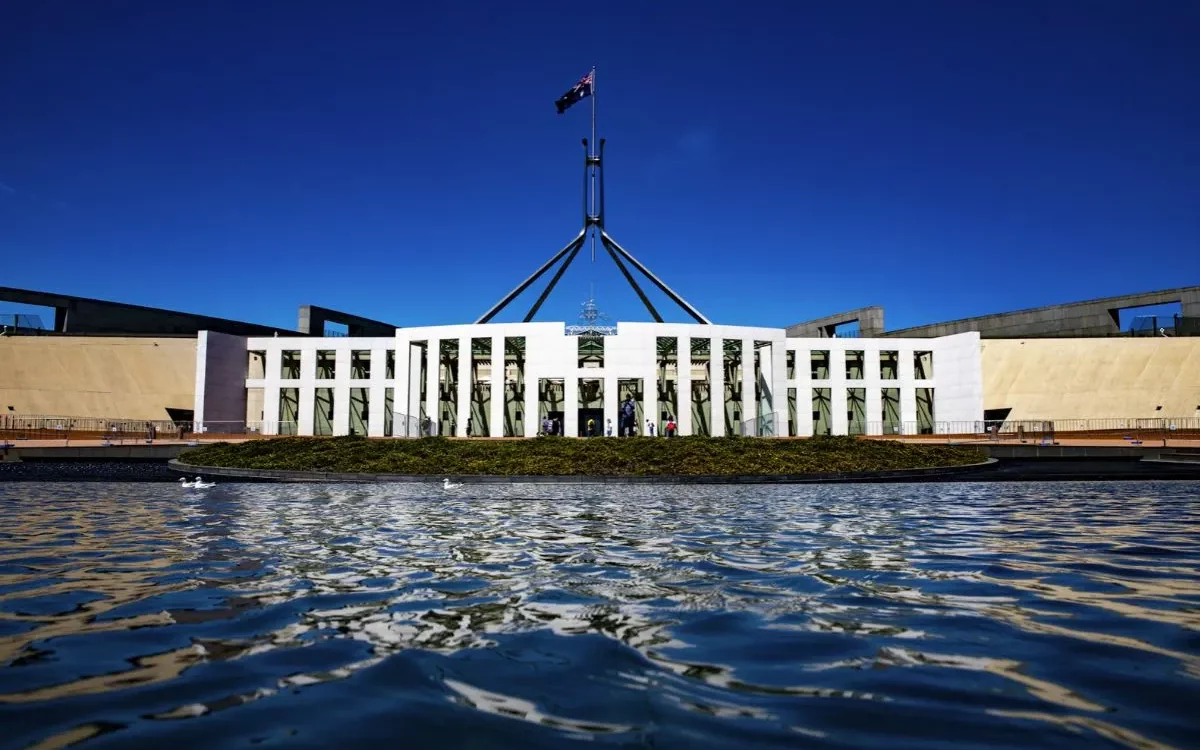
Australia is one of the most successful settler nations of the erstwhile British Empire and an outpost of Western civilization. In just 133 years from the time of Arthur Philip’s landing in 1788 to the achievement of Dominion status in 1901, Australia was built by British and broader European peoples into a unique, model nation-state. Australia has thrived under a system of high-trust institutions, common law, and a clear national identity that produced one of the safest, wealthiest, and highest standards of living on earth. Now despite, or perhaps with a great deal of spite for, this success, the Australian people are now under the same demographic, cultural, and political pressure that has been steadily transforming the rest of the West.
The transition from a nation-state for the Australian people into a multicultural state that serves no one is putting incredible strain the country. Young Australians in particular struggle to build a future in a country facing endemic housing shortages, strained hospitals and schools, rising crime in certain suburbs, and declining social cohesion. Job competition is perhaps the worst it’s ever been in Australian history, and unemployment is rising. This is the daily experience of millions of ordinary Australians.
The data shows both directly and indirectly that the underlying cause of this strain is sustained high-volume non-Western immigration that began in earnest after the end of the White Australia Policy in 1973 and the start of mass immigration which accelerated sharply in the twenty-first century.
The Demographic Situation
As of mid-2025, Australia’s estimated resident population stood at approximately 27.6–27.8 million. Of this total, 8.8 million people, or some 32% of the population, were born overseas. This is the highest overseas-born share since the late nineteenth century when Australian immigration was still dominated by those coming from the British Isles. The foreign-born population share of Australia has risen steadily from 23% in 2001 to 28% in 2016, 30% in 2021, and 32% in 2025. The absolute number of overseas-born residents has increased by more than two million in just the last decade.

Most jarring for Australian society is that the composition of the immigrant stock has shifted decisively away from traditional European sources to those of Asia and much of the third world. Today, other Westerners (those from North-West Europe, Southern and Eastern Europe, New Zealand, and most of the Americas) together account for roughly 3.2–3.4 million, or roughly 36%, of the foreign-born population. As recently as 1991, Western immigrants were 68-70% of the immigrant population; and in 1981, just 5 years after the borders were thrown open to the third world, Western immigrants were 80-82% of the foreign-born population.
The remaining 5.4–5.6 million overseas-born are non-Western, principally from Asia, the Middle East, and Africa. On a distressing note, India has now overtaken England as the single largest overseas country of birth, with approximately 971,000 foreigners in Australia sporting Indian origin. China stands at roughly 732,000. The Philippines, Vietnam, Nepal, and Sri Lanka have all recorded large absolute increases that are rocketing them past the European groups who once dominated the ports of Australia.
Of the non-Western foreign-born, a substantial share remains on temporary visas. The Australian Federal Department of Home Affairs’ quarterly temporary-visa stock data for 2025–26 show roughly 2.8–3.0 million temporary visa holders present in Australia. The largest non-Western categories are Student (approximately 530,000–730,000 depending on the snapshot), Temporary Graduate (225,000–270,000), Bridging Visas (390,000–430,000), and Temporary Resident Skilled Visas (215,000–260,000). Special Category visas (predominantly New Zealand) account for roughly 730,000 and are therefore one of the largest remaining categories of Western immigrants. A working estimate consistent with these stocks and the 2021 permanent-migrant data is that 1.8–2.2 million of the non-Western overseas-born are temporary residents who have yet to establish permanent status in the country.

Then there are the second-generation immigrants, those born in Australia with at least one parent born overseas. This population adds a further 2.0–2.4 million people to the count of non-Australians. To settle this figure in some broader context: the 2021 Census recorded 5.28 million second-generation Australians overall (22.2% of the population), but the Australian state did not publish national total of second-generation immigrants by region of parental origin. Instead, academic analyses of linked Census data can be used to confirm that a large and growing share of the second-generation immigrant population has parents from Asian, African, and increasingly Middle Eastern countries. Using this combined data, White Papers estimates that the combined first and second-generation non-Western population constitutes an estimated 26–29% of the national population.
Australian-born people of European ancestry, including those with one immigrant parent, are counted as Australian for the purposes of this analysis. Aboriginal and Torres Strait Islander people number approximately 1.06 million and are treated as an indigenous group.
Our 2026 baseline estimate of demographic composition is as follows:
- Whites born in Australia: ~15.8–16.4 million (56.8–59.0%)
- Whites born abroad: ~3.0–3.55 million (10.8–12.8%)
- Aboriginal and Torres Strait Islander: 1.06 million (3.8%)
- Non-Western (1st & 2nd gen): ~7.6–8.0 million (27.3–28.8%)
Given these estimates, which are based upon the best available academic and ABS data we could gather, the native population share of Australians, Westerners and Aboriginals born in Australia, stands at roughly 62.8% for the mid-year of 2026. This is a worse demographic situation than almost any Western country for even in the United States the combined population of White, African, and native Americans still composes roughly ~72% of the population.
Australians are at serious risk of being replaced in their own country, and they are increasingly aware of this state of affairs.
Public Opinion on Immigration
This awareness is best demonstrated in the decisively shifting public opinions regarding immigration. In recent years multiple independent polls how shown clear majorities want immigration to Australia reduced, and in many cases a large plurality (verging on majority) want immigration reduced substantially.
A Lowy Institute Poll 2026 found that 55% of respondents said the annual number of migrants was “too high.”

A Guardian Essential polling from September 2026 found the same figure with 55% of Australians wanting the intake lowered and only 16% desiring more immigration.
Newspoll found in November 2025 that 64% of Australians wanting fewer immigrants, including 39% who wanted “a lot fewer.”
A Sky News Pulse/YouGov poll in January 2026 showed 64% supported lower immigration levels and 43% of Australians desiring a “big cut” in immigration.
A 2023 study by The Australian Population Research Institute revealed that 70% of Australians want less immigration and 42% want “a lot” less immigration. 61% believe Australia has “enough” diversity and needs to encourage Australian identity.
Resolve Political Monitor polling has repeatedly found majorities supporting a pause until housing supply catches up and, in one case, majority support for restricting intakes to countries with similar legal and cultural traditions.
Tolerance of the dogma of multiculturalism in Australia is also declining markedly. The Scanlon Foundation Mapping Social Cohesion surveys show that support for multiculturalism as a general principle remains in the mid-80s, yet the share saying the number of immigrants is too high rose sharply to 48% by 2025. Of those who say immigration is too high, large majorities cite housing shortages, pressure on health and education services, and rising crime or declining social cohesion as the primary drivers. Among respondents who believe migration is driving up housing costs, 82% say the current intake is too high. These results appear across Essential, Newspoll, Resolve, YouGov, and Lowy. Rather than the typical scare-mongering about “far right ideologues,” these surveys highlight the great public displeasure with the results of mass immigration and multiculturalism.
The Australian people have noticed what their elites have refused to acknowledge: the scale and composition of recent immigration have altered the country faster than any previous wave, and the costs are now visible.
The Fiscal and Economic Burdens of Replacement Migration
High net overseas migration has coincided with acute housing shortages and rising costs of living. Net overseas migration peaked near 536,000–538,000 in 2022–23 and was still 306,000 in 2024–25, accounting for roughly 73% of total population growth. While population growth has been driven overwhelmingly by mass immigration, only 172,000–176,000 new homes have been completed annually in Australia in recent years. At an average household size of 2.5 persons, migration alone implies demand for roughly 122,000 dwellings annually; and that is before counting births to immigrants already present in Australia. Young Australians are being priced out of homes and therefore the ability to start their own families because of the arrival of masses of immigrant families each year.
This incredible level of artificial (immigration driven) demand is, of course, affecting the prices for home buyers. A neighborhood-level study found that a one-percentage-point increase in net overseas migration as a share of the local population raises single-family home rents 2.8% and apartment-unit rents by 4.3% and increases unit prices by 3.2% in all other types of dwelling. In suburbs where migration was a consistent population driver, rental unit price growth was roughly 2.5 times higher than in suburbs where migrant populations were falling against the national average. Because of a ceaseless inflow of foreign nationals, Australian national vacancy rates have been driven to a historical low of just 1.4% of housing units in September 2026, all while advertised rents had risen 7.6% year-on-year.
Perhaps unsurprisingly, multiple polls show that Australians link elevated immigration directly to these housing and rental pressures.
Costs are not only isolated to the private portion of the Australian economy, though. State spending is also affected by mass immigration. As of June 30, 2025, there were 46,998 adult prisoners in Australia, of whom 14% or 6,541 were born overseas. The most common overseas countries of birth among prisoners were New Zealand (1,054), the United Kingdom (551), and Vietnam (457). Annual prison operating costs are $6.8–7.3 billion annually, or roughly $436 per prisoner per day ($159,510 per year). The overseas-born cohort therefore accounts for roughly $1.0–1.05 billion per year in direct prison costs.
And while we could not find reliable data on second-generation immigrant criminality in Australia, there are other ways to see how the children of immigrants fiscally impact Australians. Australian school systems carry large additional costs due to mass immigration. In New South Wales (NSW) public schools 40% of students are from a language background other than English. And of those, about 65% are learning English as an additional language or dialect, equating to 26.6% of all NSW public school students (205,555 EAL/D students in 2025). Some individual schools in western Sydney report LBOTE shares of 90–97% while the state of Victoria enrolled 8,678 newly arrived English deficient students in government schools in 2024 alone. The Commonwealth low-English-proficiency budgetary burden is estimated at $74 million in 2026 with states fund additional specialist teachers, Multicultural Education Aides, and intensive new arrival programs. The $25 million federal Community Language Schools program supports approximately 90,000 students in 84 languages outside regular hours.
There are also non-fiscal costs to Australians, namely in being removed from their own institutions. Public universities in the country allocated 160,000–161,000 new international student places for 2026. That is 160,000 university places that exclude an Australian-born student. The University of Sydney gave out 51% of its enrollment places to international students in 2024 while Murdoch University reached 57%, The Royal Melbourne Institute of Technology new enrollment was approximately 50% international, and most other major public universities saw international enrollment in the low to mid 40% range. Some of these institutions enrolled fewer domestic students in 2024 than in 2019. There are even issues within the university system itself. International students, who pay full tuition fees and are therefore financially fruitful for universities, have a graduation rate of 79% compared to just 62% for Australian-born students.
The Australian university system has, seemingly, been entirely reconstructed to service foreign-origin students at the expense of the Australians who built and maintain the system with their labor and tax dollars.
Next, we must evaluate the welfare system. For while it is true that working age income support uptake is lower for the overseas-born overall (~7%) than for the Australian-born (~12%) a more granular look reveals that rates vary sharply by origin. Among the Indian-born roughly 1.8–2% take up income support benefits, Chinese-born and several other Asian groups average 4–5%, while refugee and more broadly Islamic origin groups are far higher with ~33% of Afghans, ~39% of Iraqis, and ~46% of Syrians requiring income support from the Australian taxpayer. Among those receiving the disability support pension, some 14% were born in a non-English speaking country. And of those receiving payouts from the National Disability Support Scheme, some 9% are of non-English speaking foreign birth. These might seem like paltry sums but in reality, they represent tens of billions pf spending by the Australian taxpayer.
One estimate by the Australian Department of Social Services (DSS) from June of 2017 estimated that the 300,000 working-age migrants receiving working-age payments from the Australian taxpayer would represent a total lifetime tax burden on the Australian people of $101.9 billion or $340,000 per migrant. This is a staggering cost for just this particular group of migrants.
Now let’s look at the remittances leaving the Australian economy. While Indians and the Chinese might not be a huge and direct drain on the Australian welfare state, they are still taking jobs from Australians and sending tens of billions abroad. This is money that will never be spent back into the Australian economy. A series of data highlighted by the Australian media in 2025 showed that, according to the World Bank, the Australian Bureau of Statistics (ABS), and the Department of Foreign Affairs and Trade (DFAT) showed that more than $38.2 billion (US$25 billion) in remittances flowed out of Australia in 2024. This represents roughly 2.2% of Australia’s economic output per annum being transferred abroad and is twice the Australian budget deficit of $15 billion for fiscal year 2025.
Australia Needs a Comprehensive Remigration Policy
Like with any Western nation facing the specter of demographic replacement, WPPI advocates a set of mandatory and voluntary remigration policies aimed at transforming Australia from a nation of strangers to a nation-state once again. Mandatory remigration enforces existing law against those with no enduring legal or moral claim to remain: visa overstayers, those whose temporary status can be non-renewed, criminals, permanent residents without a marriage tie to a native-born Australian, and the minor children who accompany them. Voluntary remigration offers financial and logistical support to non-Western citizens and long-term residents who elect to return to ancestral countries of origin or a willing third country. The distinction is both legally and politically necessary. Australia already possesses the statutory tools to remove non-citizens. The voluntary program addresses the residual population that holds citizenship but has not integrated and, in many cases, has expressed a desire to return under the right conditions.
Mandatory Remigration Policies (MRP)
Australia already possesses the legal tools to remove non-citizens. Temporary visa holders can be required to depart when their status ends. Overstayers are subject to removal. Criminal non-citizens can be deported. Permanent residents can have their status reviewed and cancelled where they have no enduring claim based on marriage to a native-born Australian. Minor children of removed persons should depart with their parents. Applying these tools systematically produces the following mandatory outflows:
- Non-renewal and non-replacement of temporary visas (excluding students): ~700,000–900,000 non-Western temporary residents
- 80% reduction in student and post-study graduate visas: ~500,000–600,000 people
- Removal of overstayers and irregular status holders: ~80,000–120,000
- Deportation of criminal non-citizens and dual citizens convicted of serious offences: ~ 40,000–60,000
Cancellation of permanent residence for non-Western permanent residents who are not married to a native-born Australian: ~ 1.6–2.0 million people
The permanent resident revocation measure is the most important of those above, as there is little reason for someone with no connection to the Australian national community to continue to reside in the country. By including minor children who depart with their parents, we can also add several hundred thousand people to the mandatory remigration total, as White Papers does not advocate breaking up families. Combined, these mandatory measures produce an outflow on the order of 2.9–3.7 million first and second-generation immigrants. These measures enforce the conditions under which temporary and permanent status was granted, and they do not require the denaturalization of ordinary citizens.
Voluntary Remigration Policies
Alongside the necessary MRPs, Australia must also engage in a fiscal and social program aimed at reducing the population of non-Australians who live in the country but would rather live in their own homeland. This mainly looks at the residual non-Western population of citizens and long-term permanent residents who need support to relocate abroad.
As ever, White Papers advocates for a paid remigration program centered around a grant on the order of $75,000 per individual in a family, plus travel assistance and general logistical support in organizing the relocation. The program would target the most culturally alien immigrants to the country and would, generally, not be open to Western immigrants who share a common culture and civilization with Australians such as Brits, Americans, or New Zealanders.
Under a 60% VRP uptake scenario applied to the residual non-Western population, the voluntary program produces an outflow of approximately 1.2 million people, including accompanying minor children. This is composed primarily of naturalized non-Western adults and their Australian-born children who elect to take the grant, plus a smaller number of permanent residents who were married to native-born Australians but choose to depart anyway. This grant would, like any other White Papers proposed remigration policy, be available for twelve years.
Australia After Remigration
Under the expanded mandatory measures (including the permanent-residence rule limited to those married to native-born Australians) combined with a 60% voluntary uptake on the residual non-Western population, total departures fall in the range of 3.8–4.9 million including accompanying minor children. The central scenario used here is 4.4 million departures.
Australia’s population falls from roughly 27.8 million to 23.4 million. The resulting composition is:
- Australians (White Australians, their spouses, their children): 17.9 million (76.5%)
- Aboriginal Australians: 1.06 million (4.5%)
- Non-Western residual: 2.6–2.9 million (11.1–12.4%)
- Other Westerners: 1.3 million (5.6%)
The overall Australian share (White Australian + Aboriginal + Western-origin foreign-born family) rises to approximately 81%. The broader Western share of the population rises to roughly 87%.
In a post-remigration Australia, the residual non-Western population consists primarily of those permanent residents married to native-born Australians who elect to remain and naturalized citizens and their descendants who declined the remigration grant during the 12-year period.
The absolute reduction in population eases pressure on housing and infrastructure. The compositional shift restores a clear native majority and returns the non-Western share to a level last seen in the late twentieth century. Public opinion already supports the direction of travel. Majorities across multiple independent polls want lower immigration. Majorities support forced removal of overstayers and greater scrutiny of protection claims. The legal instruments for the mandatory layers already exist or can be activated through existing cancellation and non-renewal powers. A modest, time-limited voluntary grant program supplies the remaining outflow among citizens. Australia is in a stronger institutional position than most Western countries to implement an orderly remigration program and restore the demographic balance that underpinned its historic success. The alternative is continued high-volume non-Western immigration, further erosion of social cohesion, and the progressive transformation of a successful Western nation into a low-trust, high-cost society in which the founding population becomes a diminishing minority in its own cities. The choice is available. The tools are available. The public is already ahead of the political class.