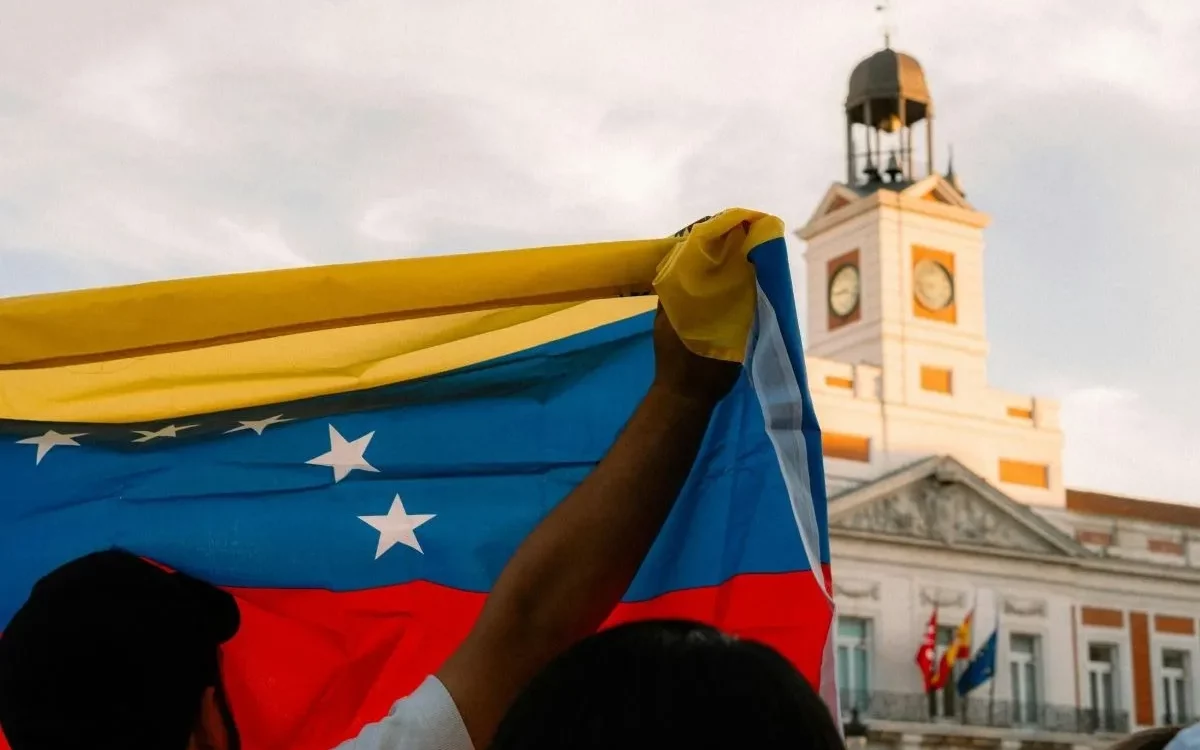
In his press conference on Saturday, President Trump said, “We want peace, liberty, and justice for the great people of Venezuela. And that includes many from Venezuela that are now living in the United States and want to go back to their country—it’s their homeland.”
Let’s make that possible! There are 1.16 million Venezuelan immigrants in the United States, and prior to the July 2024 election, 65% of Venezuelans settled in the U.S. stated they would return if Maduro was no longer in power. This is before any kind of economic transformation.
There are eight million Venezuelans that have emigrated from Venezuela since Maduro took power in 2013. This mass exodus has been compared to the Syrian migrant crisis. Similarly, this diaspora is now openly celebrating worldwide; and, as with Syria, remigration support should be a priority.
The United States maintains the highest Venezuelan migrant population of any Western nation with a legal population of over 750,000 and illegal population estimated to be 650,000. They also accounted for another approximately 261,000 encounters at the border in 2024, a figure second only to Mexicans.
How did they get here? Recently in the U.S., the Biden administration designated Venezuela for Temporary Protected Status in 2021 and expanded the program in 2023. As of January of 2025, 607,000 Venezuelan nationals received TPS.
Venezuelans were also granted access to a humanitarian parole program CHNV (Parole for Cubans, Haitians, Nicaraguans, and Venezuelans) to legally enter the United States.

In an effort to reduce the overall immigrant population, the Trump administration reversed these protections. Upon his inauguration, Trump signed an executive order terminating the CHNV parole program which granted protection to Cubans, Haitians, Nicaraguans, and Venezuelans in the United States so long as they could supply a U.S. sponsor. 117,330 Venezuelans who were participating in this program as of December 2024 could be returned home.
Trump also ended Temporary Protected Status for about 600,000 Venezuelans in the U.S., and most recently added Venezuela to his latest travel ban proclamation. On Sunday, DHS Secretary Kristi Noem reiterated that these individuals can apply for refugee status which would grant them work authorization, access to welfare, and a pathway to citizenship. This was a poor choice of words and was strongly opposed on social media. The DHS X account scrambled to cover and reiterate that “now they can go home to a country that they love.”
Data on how many asylum applications were approved in 2025 is unavailable, but only 12,000 Venezuelans were resettled as refugees in FY 2024, dramatically fewer than the 605,015 figure covered under TPS as of March 2025. Future refugee claims must be evaluated against the need and safety for Venezuelans to live and work in their own country.
Thankfully, their prospects are now looking up. Anyone who would oppose Trump’s efforts to reduce migration into the U.S. on humanitarian grounds should be delighted by the news in Venezuela. This is a new opportunity for Venezuelans to return and rebuild their country.
According to an interview with CBS, Defense Secretary Pete Hegseth, the top U.S. priority in Venezuela is rebuilding the oil industry. The country’s oil industry began collapsing before the imposition of U.S. sanctions, and today only operates at 20% capacity. These industries will need Venezuelan workers.

(Image credit: AF Post)
These U.S. investments could also require producers to sell oil to the American market at a fixed price for the next 3-5 years both ensuring U.S. market stability and economic stability for Venezuela.
Another avenue of support is savings from welfare assistance. In the United States, 29.4% of Venezuelan immigrant households are receiving some kind of welfare assistance. This should be redirected toward relocation and infrastructure support.
Secretary of State Marco Rubio worries that the potential for gang violence threatens safety. He’s not wrong. Regional stability is in our best interest. U.S. citizens worry that intervention means boots on the ground, but there are other, better options. There are U.S. allies in the region with a vested interest in suppressing gang violence and drug trafficking including Argentina and El Salvador. Options exist. Nayib Bukele, who has a 90% approval rating for nearly eliminating gang violence in El Salvador, offered to stabilize Haiti in February of last year if given appropriate support. Venezuela is more than twice the size of Haiti, but the U.S. should work with allies in the region to ensure Venezuela maintains a strong government able to protect its people.
In the nine months following the fall of Bashar Al-Assad, the UN Refugee Agency (UNHCR) reports that over one million migrants have returned to Syria. We should support similar success in Venezuela. Humanitarian aid from the U.S., which totaled $44 million in 2025, should be used in support of building infrastructure staffed by Venezuelans.
Let us be clear: the United States does not need any justification to protect the interest of its founding demographic and guard its borders. This is the moral responsibility of any state. However, we advocate for international cooperation for the humane return of migrants wherever possible. Venezuelan regime change is an ideal opportunity for voluntary remigration.