• About
  • Issues
    • Demographics
    • Economic Policy
    • Foreign Policy
    • Remigration
    • Social Policy
  • Analysis & commentary
Donate

LEVEL2

  • About
  • Issues
    • Demographics
    • Economic Policy
    • Foreign Policy
    • Remigration
    • Social Policy
  • Analysis & commentary
Donate
  • X
  • Telegram
Issues Remigration

African & Caribbean Immigration and Remigration

African & Caribbean Immigration and Remigration
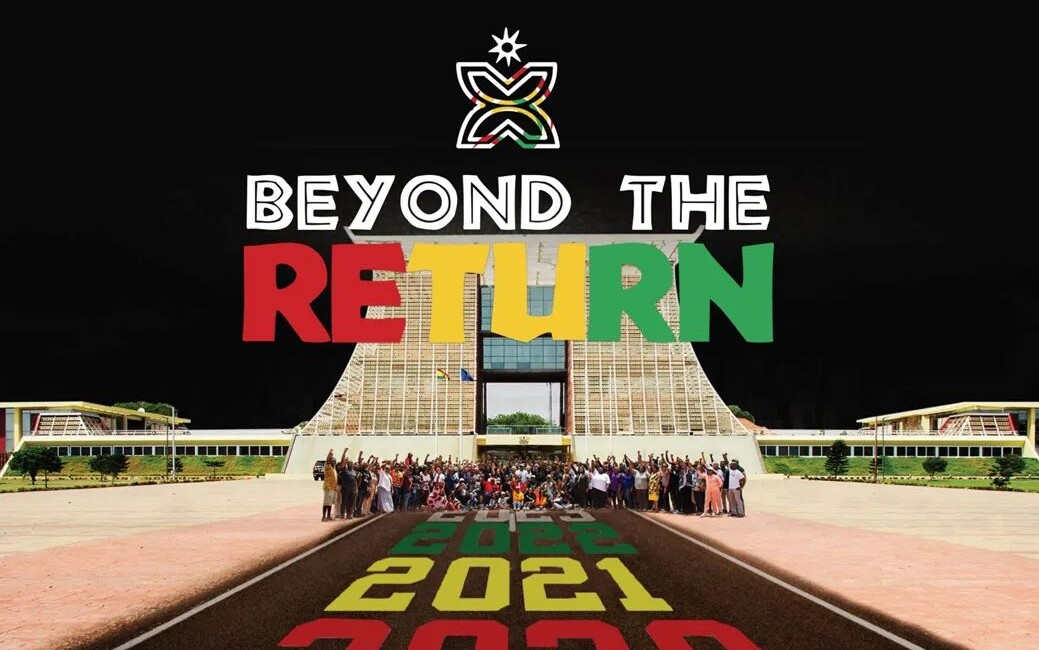
  • An advertisement for Beyond the Return: a Ghanaian government initiative inspiring tourism and investment in Ghana and encouraging the return of the African diaspora.

    At White Papers, our core premise is that Western nations deserve to protect their sovereignty, their political institutions, and their founding demography, and to build a future free from interference by alien cultures or hostile elites. The reality is, the nations of the West are at risk. The peoples native to Europe and those that founded Western nations like America are at risk of becoming minorities in their own homelands after decades of unwanted mass immigration, facilitated by our own elite political class. In some cases, this was done for ideological reasons (globalism). In other cases, it was to drive down the cost of labor for short-term gains. The inevitable and necessary result of these anti-democratic immigration policies by the post-war liberal establishment is a growing political movement that has risen to reject the premise of continued mass immigration and, crucially, to reverse these trends.

    Nationalists and patriots, more than anyone, know the data. They look at the graphs, charts and trends, and understand that, if we do nothing, The West is lost forever! But what can be done? Is it too late?

    White Papers knows something CAN be done. Something MUST be done. We have advocated these changes for more than six years, and now that pro-Western parties are coming to power across our civilization—the Netherlands, Austria, Sweden, France, and beyond, it is time to expand our vision of what can be done to reverse the anti-democratic project of mass immigration.

    Remigration (also called repatriation) is simple. It is the return of recent immigrants, and many of their descendants who have failed to integrate into Western societies, to their respective homelands or perhaps third-party countries willing to take them. It is the policy most needed to correct the course of Western Civilization. Most importantly, though, it is a practical policy.

  • Related Articles
    • The American Repatriation Policy Platform—Reviving the Nation

      Read
  • Westerners, even to our detriment, are some of the most welcoming and hospitable peoples on Earth. Repatriation must, therefore, happen in a peaceful and just manner which respects the dignity of those being asked and incentivized to leave our nations. Remigration is not inhumane or disparaging of other peoples.

    A note regarding racial and ethnic terminology for this series: We realize that some terms are contentious. However, for the sake of simplicity and directness, we will be sticking with current Census Bureau terminology for these pieces rather than using novel language such as “Latinx.”

    America’s demographics have changed radically since the passage of the 1965 Immigration Act, but this change has not only affected the foundational White majority of the United States. African Americans, the country’s only other foundational group are also facing severe replacement pressure due to mass immigration. The Black population of the United States is slowly transitioning from one that was 95% composed of multigenerational and deeply-rooted African American families to one that is composed more and more of Black immigrants from Africa and the Caribbean as well as the children of these immigrants.

    Today, more than 21% of the Black population of the United States, or about 9.8 million people, are first and second-generation Black immigrants.

    This figure was rising rapidly prior to the immigration restrictions of the current Trump administration, but it will take more than simple restrictionism to reverse the tide of mass immigration from Africa and the Caribbean.

    In 1980, just 130,000 African and 685,000 Black Caribbean immigrants resided in the United States. These were small populations who lived in very restricted geographies (generally Florida and New York City). Today, the picture is wildly different. As of 2024 more than 2.5 million African and 2.75 million Black Caribbean immigrants live in the United States alongside their more than 4.5 million US-born children. All told the Black immigrant population of the country has more than doubled from 2.4 million in the year 2000 to 5.6 million as of 2024, according to the PEW Research Center. Since the year 2000, the United States government has welcomed more than 230,000 Ethiopians, 160,000 Dominicans, 150,000 Kenyans, 60,000 Somalis, and 320,000 Jamaicans to the country—all without consulting the American people.

    For certain, some if not many of these 10 million recent first and second generation immigrants are law abiding, well integrated, self-sufficient individuals and families. They are good people, good neighbors, and patriotic about their adopted homeland. However, the reality remains that most are simply imported foreigners. They live in parallel societies, do not identify as Americans, and require huge levels of support from American taxpayers via the welfare state. Indeed, the 2024 SIPP survey as examined by the Center for Immigration studies found that 51% of legal immigrant households, 69% of illegal immigrant households, and 49% of naturalized citizen households rely upon the generosity of the American welfare state to make ends meet. More granular data published in 2026 showed that 58% of Caribbean households and 42% of African households in the United States utilize the traditional welfare system while these figures skyrocket to 65% and 46% respectively when factoring in the Earned Income Tax Credit and the Additional Child Tax Credit which each pay filers many thousands of dollars of taxpayer money. Specifically, the ACTC can pay up to $1,700 per qualifying child, a serious boon for an immigrant family that, on average, has 3.22 persons compared to just 2.52 for a household of native-born Americans.

    The problem is also intergenerational. The same 2024 data examined by the Center for Immigration Studies found that while 52% of Black immigrants would utilize the welfare state at some point, this number only slightly declined to 48% for second generation immigrants (their American-born children), and then rose significantly to 56% for the 3rd generation (people whose grandparents immigrated to America). Americans never voted for this and would likely be in uproar if these figures were more widely known.

    Americans must face the reality that if 52% of African immigrant households are indeed reliant upon public welfare and this persisted across generations, then more than 5.1 million African immigrants and their descendants should never have been admitted into this country to begin with, let alone made our “fellow Americans.” The Personal Responsibility and Work Opportunity Reconciliation Act of 1996 (PRWORA) was specifically designed to prevent this kind of welfare-based mass immigration, but interpretations of this law allowed it to be hardly applied for decades. The only just way to undo this state of affairs is to reverse the tide on mass immigration and send these public charges, and their families, home.

    There are numerous policy options available to remove unwanted foreign dependents from the United States: cancelling work visas, revoking citizenship from criminals, simple immigration enforcement for overstayers, and a broad administrative review of all citizenship applications since 1965 with a focus on welfare recipients. Many of these applications are already known to be fraudulent. We need only look back on the Immigration Reform and Control Act of 1986, also known as the “the Reagan amnesty,” which even current GOP policymakers will admit was riddled with fraudulent cases, 90% of which were approved.

    African and Caribbean immigrants who obtained their citizenship through fraud or deceit, such as that mentioned above, would then have that citizenship revoked. Usefully, this precedent is already well established in American law, and a nationalist administration would not be taking any wildly unprecedented steps nor violating any norms by utilizing this fantastic precedent. The grounds for expansion of denaturalization are also being explored in Senator Erik Schmitt’s SCAM Act and Representative Andy Ogles (R-TN) upcoming ASSIMILATION Act. These pieces of legislation are a great start, but more will be required.

    Namely, Congress is going to need to expand denaturalization to cover the African and Caribbean (and other) immigrants who have relied heavily upon the American taxpayer.
  • Related Articles
    • Denaturalization Laws are Commonplace

      Read
  • If immigrants came to this country and have relied upon Medicaid, food stamps, WIC, housing assistance, or any combination thereof for any reason aside from serious sickness or disability, they should be denaturalized and returned to their home countries. It is not the duty of the American people to host a permanent foreign-born welfare class. Were the American state to denaturalize and/or deport all legal African and Caribbean immigrants who rely upon the welfare state (with an adjustment made for the genuinely sick, elderly and injured), it would result in about 2.3 million denaturalizations and deportations.

    There are also other demographics of recent African and Caribbean immigrants that have no right or claim to live in the United States, such as the children of illegal aliens. While it is self-evident that a pro-American government would deport the roughly 1.2 million illegal African and Caribbean immigrants, there remains the question of their children. The children of illegal immigrants born in the United States are American citizens by birthright, at least as the constitution is currently interpreted. We estimate this demographic of 2nd generation immigrants to consist of about roughly 1 million individuals with African and Caribbean parents.

    The children of illegal immigrants are, in the overwhelming majority of cases, entitled to or already possess the citizenship of their parent’s country of origin, their homeland. The United States could reasonably de-naturalize this demographic as they left with their parents, and it would not turn them into stateless individuals. The policy aligns with the 1961 Convention on the Reduction of Statelessness and therefore would not violate international law or norms.

    https://scontent-yyz1-1.xx.fbcdn.net/v/t39.30808-6/469910268_122118695210415277_1392270600823359817_n.jpg?_nc_cat=111&ccb=1-7&_nc_sid=13d280&_nc_ohc=TXO7kNnuzwsQ7kNvwH0dojj&_nc_oc=Ado4GvI3w4h_0rdMLO0WTOhHyS4Q1YQ9P--XS8Dc-PIazLOu6YyQ1efPbTQECOFnE5Q&_nc_zt=23&_nc_ht=scontent-yyz1-1.xx&_nc_gid=_bQkHAChU0BiJfxGtO1ksw&_nc_ss=7a389&oh=00_Af0J34HOXTGhtzPfVwCqCe668_2imyGMUeVb_EBJ-rwatA&oe=69EC41DF

    Through the enactment of all of the above policy recommendations, a remigration oriented American government could reasonably remigrate as many as 4.5 million African and Caribbean immigrants/illegal aliens to their countries of origin and ancestral homelands without violating domestic or international legal and human rights norms. We took care to remove African and Caribbean immigrants who are born to a U.S.-born spouse from this equation, as we do not want to break up the families of Americans. Still. this figure represents 9.5% of the current Black population of the United States and 45% of the non-African American Black population of the US.

  • Related Articles
    • Remigration and the Complexity of Communities

      Read
  • Aside from deportation, compelled by the state or voluntarily undertaken, there are other policy changes which a government that truly puts America First could implement to increase returns of illegal and irregular immigrant departures without the direct intervention of immigration officials.

    The policy changes required are rather straightforward. The first would be to make the E-Verify system mandatory for every employer, public or private, in the United States. This could be done in two ways: first by a direct legislative imperative that all institutions and employers must use the E-Verify system. But, a second, more immediate route would be to require all Federal contractors, and any business that interacts with the Federal government, or which receives Federal tax dollars, must implement the E-Verify system. Currently Federal contractors need only use E-verify on employees who “work under federal contracts” rather than all employees. This must change.

    The next necessary policy change focuses again on the Reagan Amnesty, the 1986 IRCA. This act contains a provision which makes it near impossible for prosecutors and Federal officials to take businesses to court whom employ illegal immigrants. This section (Section B) should and must be replaced, but this issue could be tackled more immediately by a nationalist government. The Attorney General could have the Justice Department’s Office of Legal Counsel issue a new opinion which more strictly reinterprets the provision to allow the prosecution of business-owners who employ illegal immigrants.

    The President should then begin the process of firing all 93 Federal US Attorneys, which he is empowered to do at his discretion. He should then turn to filling these vacancies with new U.S. Attorneys who will uphold the interpretative changes of the Attorney General. Some of this has gone on already under the new Trump administration, though we do not overlook the fact that the Senate is dragging its feet on more than 70 appointments to these positions and thereby blocking the president’s deportation agenda.

    Next, we present the necessary policy of voluntary remigration which we have championed for some years now. We have already established how economically poorly-established most African and Caribbean immigrants are. They feel like an alien population, and this is reflected in the polling. A 2024 poll by Monmouth University found that 45% of People of Color wanted to leave the United States as opposed to 27% of White Americans. Another poll conducted by the firm Harris in 2025 showed that 57% of Blacks in the United States had considered moving abroad. The generations most interested in moving were Gen Z at 63% and Millennials at 52%. Estimates show that 46% to 49% of Hispanics in the United State are Zoomers and Millennials. The most cited reasons for considering a move were a lower cost of living (49%), a dissatisfaction with American politics (48%), and a desire for a higher quality of life (43%). When asked the most important factors in considering a move 86% of those wanting to relocate cited the need to find somewhere with a more affordable cost of living. This data suggests in no uncertain terms that many African and Caribbean immigrants and their descendants would leave the United States and relocate to their own countries—or elsewhere—if they were given the financial resources to do so.

    We propose giving them those resources.

    White Papers has proposed and continues to propose a $75,000 Remigration Grant be paid to those post-1965 immigrants and their descendants with American citizenship to leave the country if they so desire. If we assume that the 57% of Blacks who expressed a desire to relocate abroad were serious about relocating to some degree and we consider the fact most Black immigrants rely upon the welfare state, we can assume that a $75,000 relocation grant will be very enticing. We estimate that roughly 3 million more 1st and 2nd generation African and Caribbean immigrants and their descendants would take a remigration payment and relocate abroad.

  • Related Articles
    • Remigration & Economy: Facts Vs. Fiction

      Read
  • In total, we estimate that 73% of the current African and Caribbean immigrant-origin population of the United States can be deported as illegals, denaturalized, or enticed to voluntarily remigrate. This figure represents 15% of the total Black population of the United States, or about 7.2 million people.

    We cannot solve the housing in California without remigration. We cannot reduce the burden on the state and federal budgets without remigration. We cannot coordinate full employment policies without remigration. We cannot expect to solve the issues of criminality and sexual violence without the large-scale remigration of the worst elements of recent immigrant populations. Most importantly, we cannot secure a future where Americans, patriotic and loyal, remain the overwhelming majority of the population of the United States without a policy of remigration.

Share this

Written by

White Papers

Share this

21 April 2026

Stay informed with our newsletter.

You are now subscribed! An error has occurred!

Help us expand
by donating.

Donate

Follow us on
social media.

  • X
  • Telegram
© WPPI 2026